
How Much Does It Cost to Paint the Exterior of a House in Ardmore, OK?
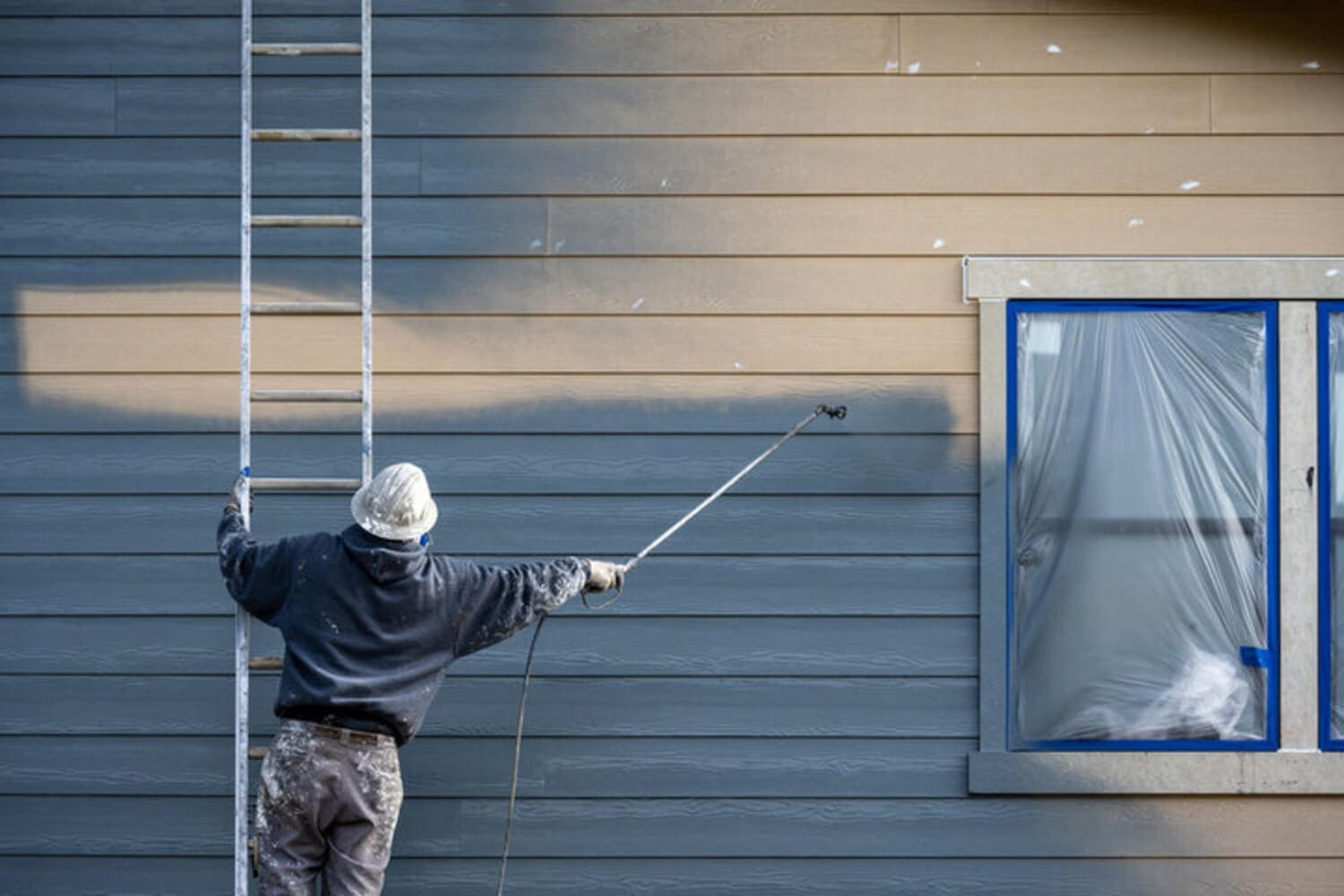
If you’re trying to figure out how much it costs to paint the exterior of a house, you want a real number, not a sales pitch. That’s a fair thing to expect before you even pick up the phone.
Most guides online give you a national range and stop there. The range is wide for reasons you can actually understand, and knowing those reasons is what lets you budget with real confidence instead of guessing. This guide breaks down the typical cost range, the specific factors that move your number up or down, and what a trustworthy estimate actually looks like once your home’s condition and Ardmore’s climate get factored in.
How Much Does It Cost to Paint the Exterior of a House: The Real Range
Professional exterior painting typically runs $1.50 to $5.00 per square foot of paintable area. Most homeowners land between $3,000 and $8,500 for a standard single-family home.
That range is wide because two homes of similar size can genuinely differ in scope. A well-maintained home in good condition needs far less work than one with peeling paint, damaged siding, or years of deferred maintenance. The price difference reflects real differences in labor, not inconsistent pricing between contractors.
A lump-sum number without square footage, coat count, or product specified isn’t something you can actually compare to another quote. The rest of this guide breaks down exactly where your home is likely to land within that range, and why.
Size and Access: The First Factor in Every Estimate
Home size feels like the most obvious cost driver, and it is a real one. But the number that matters to your painter isn’t necessarily the one on your listing sheet.
Square Footage vs. Paintable Area
Painters price against paintable area: the actual wall surface receiving paint, minus windows, doors, and garage openings. That’s different from the floor square footage listed on a home’s paperwork.
Paintable area on a single-story home usually runs about 80 percent of floor area. Additional stories and steep or complex rooflines push that number well beyond the single-story baseline. Knowing this distinction before you start comparing quotes helps you ask better questions and understand why two “2,000 square foot” quotes can come in at different numbers.
Number of Stories and Access Difficulty
A two-story home typically costs 20 to 50 percent more to paint than a comparable single-story home. Three-story homes cost more still.
Height is a cost multiplier because it requires ladders, scaffolding, or lift equipment, and every one of those adds real time and safety overhead to a project. Dormers, steep grade changes around the foundation, and second-story overhangs push toward the higher end of that range, since they often require staging rather than simple ladder work.
If your home is two stories, you should expect that surcharge as a normal part of a fair quote, not treat it as a red flag.
Surface Condition and Prep Work: The Biggest Swing Factor
Surface preparation, not paint itself, is usually the single largest variable between a low bid and a high one. Prep work can account for 30 to 40 percent of a project’s total cost.
A home in good condition needs only washing and spot priming before paint goes on. A home with peeling paint, wood rot, or years of neglected caulk needs scraping, repair, and full priming first. That difference in scope is exactly what separates a $2 per square foot job from a $5 per square foot job.
A bid that skips or underprices prep isn’t a better deal. It’s a paint job that will likely fail within a year or two, because the new coat went on over an unstable surface. Asking specifically what prep work is included, itemized rather than bundled into one number, is the single best way to compare two bids honestly. If your home has rotted trim or fascia that needs replacing before paint goes on, that’s a separate line item worth confirming up front, not something to discover mid-project.
Siding and Surface Type: Why Material Changes the Price
Different exterior materials absorb paint differently and need different primers, which shifts both material cost and labor time.
Here’s roughly how surface type affects the per-square-foot rate:
- Vinyl and metal: lower end of the range, though vinyl needs a bonding primer and vinyl-safe paint
- Fiber cement and engineered wood siding: straightforward to paint, often factory-primed
- Wood siding: widest range, since prep varies enormously with condition
- Stucco: higher paint consumption due to texture, often 20 to 40 percent more material
- Brick: highest end, since it’s porous and requires a masonry primer and breathable topcoat
A home with mixed materials, such as brick on the lower level and siding above, prices each section separately rather than applying one flat rate across the whole exterior. If your home’s existing siding has failed to the point where repainting won’t hold, siding replacement becomes the more practical conversation to have during your estimate.
Paint Quality: Why Premium Coating Usually Wins on Value
On a job where labor makes up 70 to 85 percent of the total cost, spending more on premium paint is almost always the better financial decision. It isn’t an upsell.
Premium exterior lines extend the repaint cycle by several years. That added material cost gets recovered many times over, since you avoid paying for another full labor-heavy repaint sooner than necessary. Paint and materials typically represent only 15 to 20 percent of the total bill, so the price difference between standard and premium products is small relative to the overall project.
This is one factor you have real control over, and it’s worth a direct conversation during your estimate rather than defaulting to whatever product sits at the bottom of the list.
Ardmore and Texoma Climate: What Local Conditions Add to the Equation
South Central Oklahoma’s summer heat, freeze-thaw winters, and hail exposure directly affect both the prep work required and the coatings that actually hold up long-term here.
A few specific ways local climate shows up in a quote:
- 110-degree summers bake south and west-facing walls and accelerate UV breakdown
- Freeze-thaw cycles pull caulk loose at nearly every joint over time
- Hail chips and cracks coatings that weren’t applied correctly to begin with
- Timing the project for spring or fall rather than peak summer heat affects how well the paint actually cures
A home that’s taken direct hail damage or has failed caulk from winter cycling needs more extensive prep than the same home in a milder, more stable climate. That’s part of why a generic national number doesn’t fully apply here, and why an in-home walkthrough matters more in this region than a phone estimate ever could. Climate-driven wear simply isn’t visible from a square footage number alone.
A Trustworthy Estimate: What It Actually Includes
Understanding the factors above is useful, but turning them into an actual number for your specific home requires a real, comparable estimate.
Why Ballpark Numbers Over the Phone Don’t Work
A number given without seeing the actual surface, its condition, and its exposure isn’t a useful estimate, and it isn’t an honest one either. Every factor covered in this guide, size, condition, siding type, and climate exposure, has to be assessed in person to produce a number that holds up once work begins.
A contractor willing to quote a price sight-unseen is often the one most likely to add change orders once the real scope becomes visible. A written itemized estimate that follows an in-home walkthrough protects both your budget and your timeline. Reviewing what a complete estimate should include before your walkthrough helps you know what to expect and what to ask for.
What Happens During a Free In-Home Walkthrough
A project manager walks the full exterior, inspects every surface, identifies prep needs including rot or caulk failure, and takes measurements before preparing a written quote. This is the only way to account for the specific combination of size, condition, material, and climate exposure your home actually has.
Walkthroughs typically run 45 to 90 minutes depending on home size and complexity. This step turns the general ranges covered throughout this guide into an accurate number tied to your specific house.
Getting an Accurate Number for Your Home
Exterior painting cost depends on size, access, condition, material, paint quality, and climate exposure, and all of these combine differently for every home. If you’re also planning interior work at the same time, bundling both projects into one estimate often saves time and money compared to scheduling them separately.
The ranges in this guide are a useful starting point for budgeting, but an accurate number requires seeing your actual home. A free in-home estimate walks through size, condition, material, and climate exposure together, then translates all of it into a written, itemized quote you can actually plan around.
Reach out to schedule your free estimate and find out where your specific home lands in the range.