
How Long Does It Take to Paint Kitchen Cabinets?
How long does it take to paint kitchen cabinets? If you’re planning a project, that question matters more than almost any other. The kitchen is the hardest room to live without, and you probably have guests, holidays, or work schedules to plan around.
Search for an answer and you’ll find day counts that range from a few days to several weeks. That gap makes planning feel like guesswork. The numbers disagree because they measure different things, and the one that matters depends on how your household uses its kitchen. This guide walks through each stage in order, shows what you’ll see along the way, and explains what stretches or shortens the schedule.
How Long Does It Take to Paint Kitchen Cabinets: The Typical Range
With professional cabinet painting, a full kitchen typically takes one to two weeks from removal through reinstallation. A single vanity or built-in unit usually takes a few days. That’s the crew’s working timeline, and it’s the number that matters most for planning.
The range runs wide because cabinet work is a sequence, not one job. Each coat has to dry before the next goes on. Doors have to firm up before they go back on the boxes. Waiting makes up a large share of the total.
Three clocks run at the same time:
- Crew time: the days painters actually work in your home
- Doors-off time: the stretch when your kitchen looks unfinished
- Cure time: the weeks the finish keeps hardening after reinstallation
Most guides blend these into one number, which is why you’ll see promises of three to five days. Shorter numbers usually count only hands-on days, cover a smaller scope, or rely on accelerated curing. So when you ask how many days cabinet painting takes, ask what the number includes. If you’re comparing quotes, what to know before requesting a painting estimate helps you ask each painter for the same details.
The Stages of Cabinet Painting: What Happens and How Long Each Takes
Each stage has to finish before the next can start. Following the order shows where the time actually goes.
Removal, Labeling, and Protection
The crew starts by removing every door, drawer front, and piece of hardware. They label each piece so it returns to its exact opening. For an average kitchen this takes part of a day, and larger kitchens take longer.
Labeling matters because doors in a run aren’t interchangeable. Each opening has its own hinge position and gap, so skipped labels cause alignment problems later. Those problems cost more time than labeling ever would. A typical kitchen has twenty or more doors and drawer fronts, so a clear system saves real time at the end.
The cabinet boxes stay in place, so your dishes and pantry items stay within reach. The doors stay off for several days, and most families set up a temporary station on the counter. Before any sanding begins, the crew covers your countertops, floors, and appliances. Dust control is why the crew doesn’t rush this step.
Cleaning, Degreasing, and Sanding
The crew degreases and scuffs every surface so primer can bond. Kitchens carry years of cooking residue near the stove, sink, and pulls. Primer applied over grease doesn’t hold.
This stage runs longer in two common situations:
- Kitchens that have never had a deep clean
- Doors with raised panels or routed edges, which need more hand sanding than flat doors
Skipping this step is one of the most common reasons cabinet finishes chip or peel. After sanding, the crew wipes every surface down so dust doesn’t end up trapped under the primer.
Priming With a Bonding Primer
The crew applies a cabinet-grade bonding primer matched to your material: wood, MDF, laminate, or an existing painted finish. It isn’t the primer you’d use on walls.
Primer has to dry fully before any finish coat goes on. That’s the first real waiting period in the schedule, often most of a day or overnight depending on the product and conditions.
Stained wood that bleeds tannins and heavily glossy surfaces may need a second coat or a specialty primer. That adds time, but primer is where adhesion and stain-blocking happen. Rushing it leads to bleed-through and peeling at the edges.
Spraying the Finish Coats
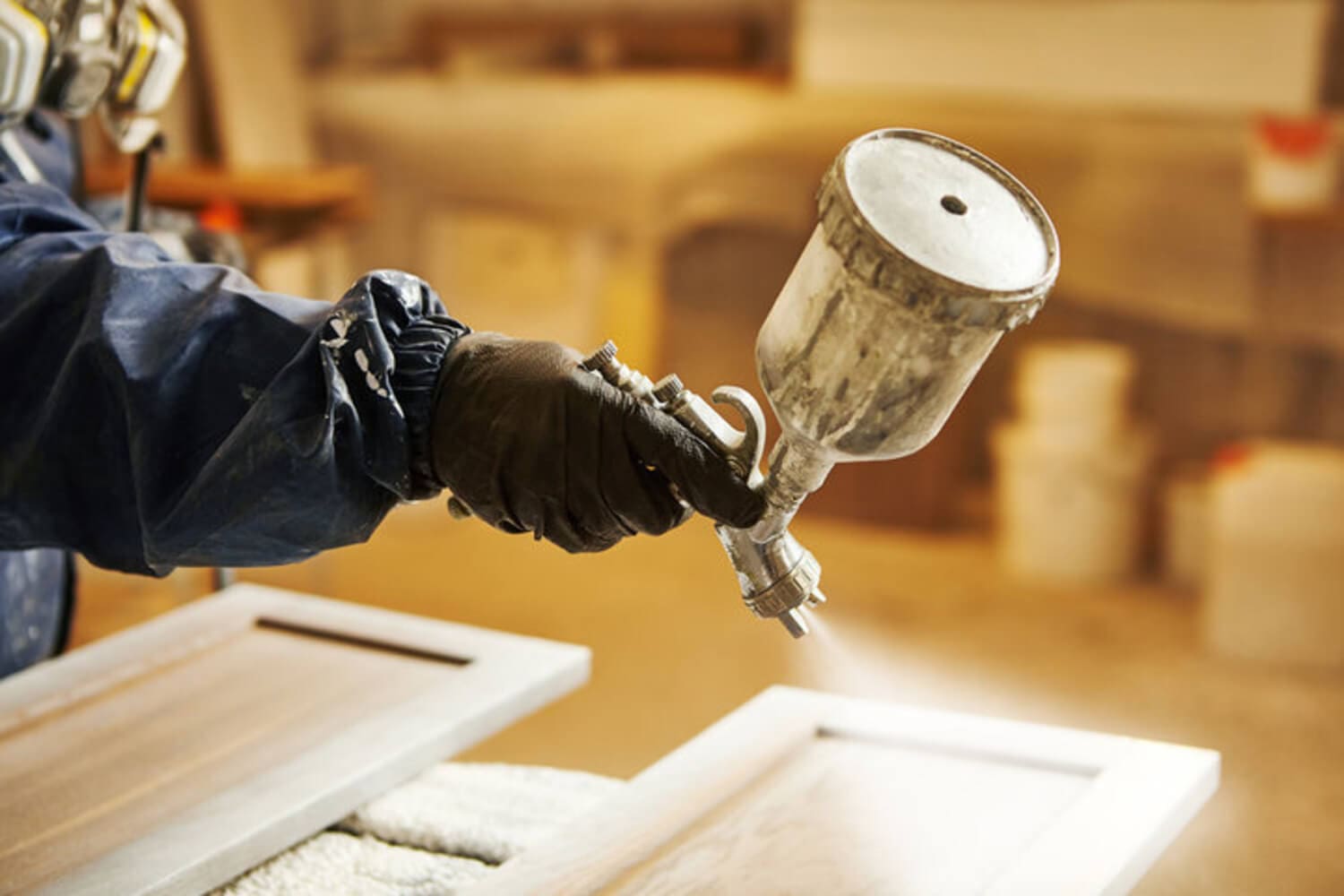
The crew sprays two to three finish coats. They spray doors and drawer fronts in a controlled environment and paint the boxes on site. Spraying creates a smooth, factory-quality surface that brushing can’t match on raised panels and edges.
Most of the time in this stage goes to drying between coats, not applying paint. Doors also need both sides finished, so the crew flips them and waits again. Each coat goes on thin and dries fully before the next. Between coats, the crew checks every door for runs or dust. Rushing it leaves a soft finish that marks easily.
Your kitchen stays usable but limited while the crew paints the boxes on site. Modern water-based cabinet paints have lower odor than older oil-based finishes, so most households stay home.
Drying and Curing: Why Dry Isn’t the Same as Done
Cabinet paint feels dry to the touch within hours. Doors still can’t go back up until the finish firms up, which typically takes a few days depending on the product.
Full cure takes roughly two to four weeks. That’s when the finish reaches maximum hardness, and a finish that looks done can still dent or mark before then. During the cure, follow a few habits:
- Avoid harsh cleaners and standing moisture
- Keep items from pressing or stacking against the doors
- Wipe with a soft, damp cloth
Early chipping often traces back to heavy use in the first couple of weeks. Once the cure finishes, cleaning painted cabinets safely keeps the finish looking new. The cure is the third clock, and it keeps running after the crew leaves.
Reinstallation, Hardware, and the Final Walkthrough
The crew re-hangs the doors and drawers and adjusts them for even gaps and proper swing. They drill and install any new hardware. For a typical kitchen this takes about a day. Alignment takes patience, because even small hinge adjustments change how a door sits.
Hardware changes add time. Switching from knobs to pulls with different spacing means filling the old holes and drilling new ones. Decide on hardware before the project starts so the schedule accounts for it.
Then you walk through every door and drawer with the crew before final payment. A check-in follows about a week later. The crew’s work ends here, but the cure continues.
Timeline Factors: What Stretches or Shortens the Schedule
The one-to-two-week range moves with a handful of factors. You can spot most of them at the in-home estimate, so nothing surprises you mid-project.
Door Count, Existing Finish, and Scope
Door and drawer count is the most direct factor. More openings mean more surfaces to prep, prime, and spray. The added time scales with the count instead of adding one flat day.
Several other things change the pace:
- Starting condition: previously painted cabinets in good shape move fastest, while stained wood, melamine, and failing paint need extra prep. Painting laminate cabinets takes specific primers and careful sanding.
- Scope: doors and drawer fronts only is faster than a full refinish that includes the boxes, and built-ins add time.
- Repairs: damaged frames, loose hinges, or water damage need carpentry repairs before any paint goes on.
- Color: a dramatic change, such as dark to light, typically adds a coat and its drying time.
Ardmore Weather and Seasonal Scheduling
Humidity slows drying. Oklahoma’s humid summers stretch the wait between coats on work done in the home, such as the box faces. A controlled spray environment limits the effect on doors. Very cold weather slows drying too, so a heated, ventilated work area matters in winter.
Fall brings its own pressure. Many homeowners want their kitchens ready for holiday hosting, and that tightens crew calendars. Book early and build in a buffer. If you’re painting walls the same season, how long interior painting takes helps you sequence both projects.
Plan backward from the date your kitchen must be ready, and count the first week of cure. That’s how you avoid a rushed finish.
Plan Around the Cure, Not Just the Painting Days
A full kitchen typically takes one to two weeks of crew work. Your doors stay off for several days, and the finish keeps curing for two to four weeks after reinstallation.
Planning only around the painting days leaves you with a kitchen that looks finished but still dents easily on the day of a big meal. Plan for all three clocks instead. And when a quote promises a much shorter timeline, ask what it counts.
The most reliable next step is a free in-home estimate. We’ll count your doors, inspect the existing finish, and put a realistic timeline in the written quote before you commit. That way the schedule fits around the holidays or any other date on your calendar. Contact us to schedule your free in-home estimate, and we’ll map out your kitchen timeline together.